


Buying Better, Together: Lessons from Manila on Strategic Purchasing and Regional Collaboration
In mid-September, health financing experts, policymakers, and researchers from across Southeast Asia gathered in Manila for two back-to-back convenings:
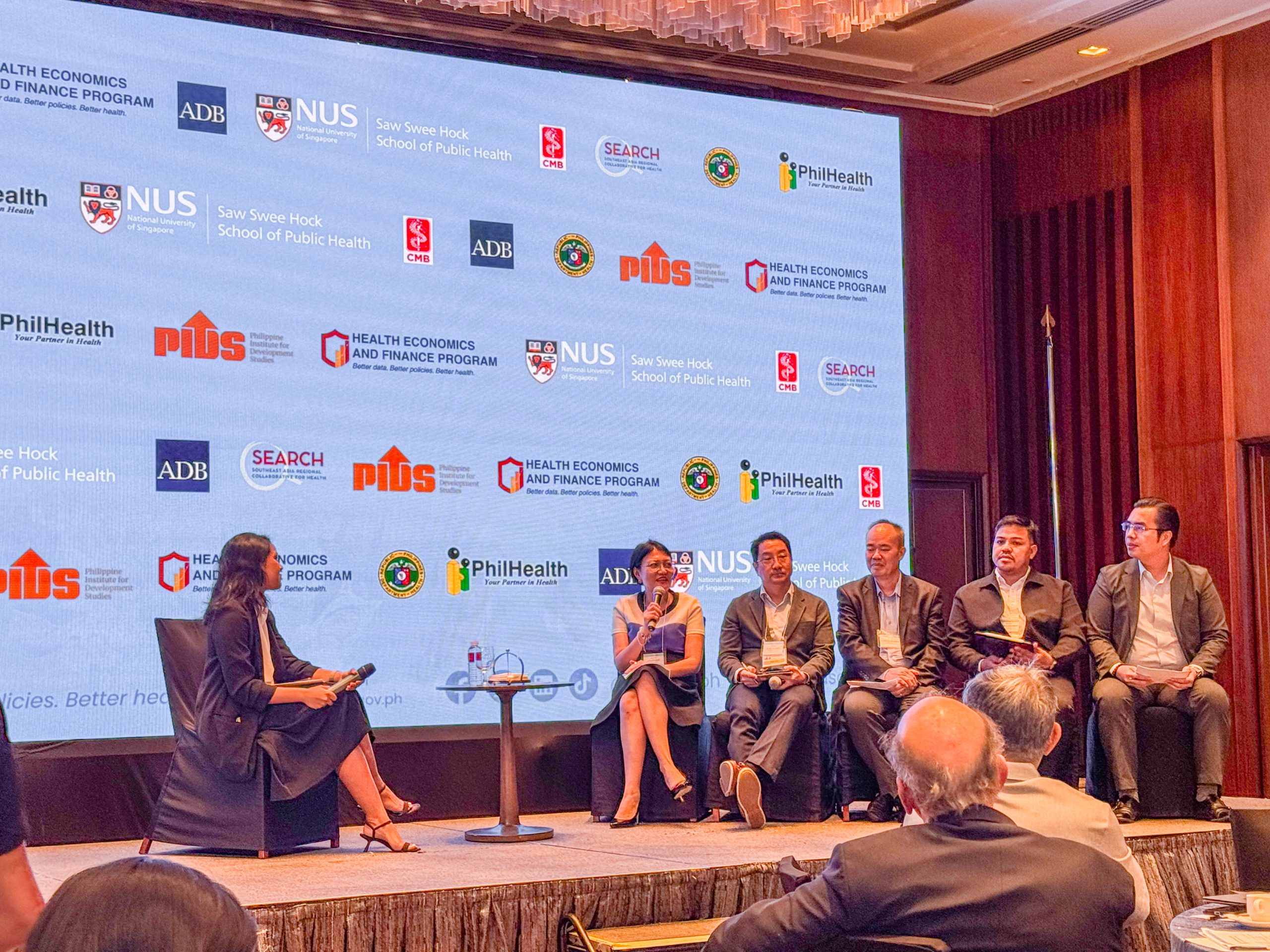
- UHC in Numbers Series No. 2: Financing Better Health: Local Evidence and Regional Lessons for Universal Health Care (16 September). Convened by the Philippine Institute for Development Studies-Health Economics and Finance Program (PIDS-HEFP) and co-hosted by ADB, China Medical Board (CMB Foundation), NUS Saw Swee Hock School of Public Health, and SEARCH.
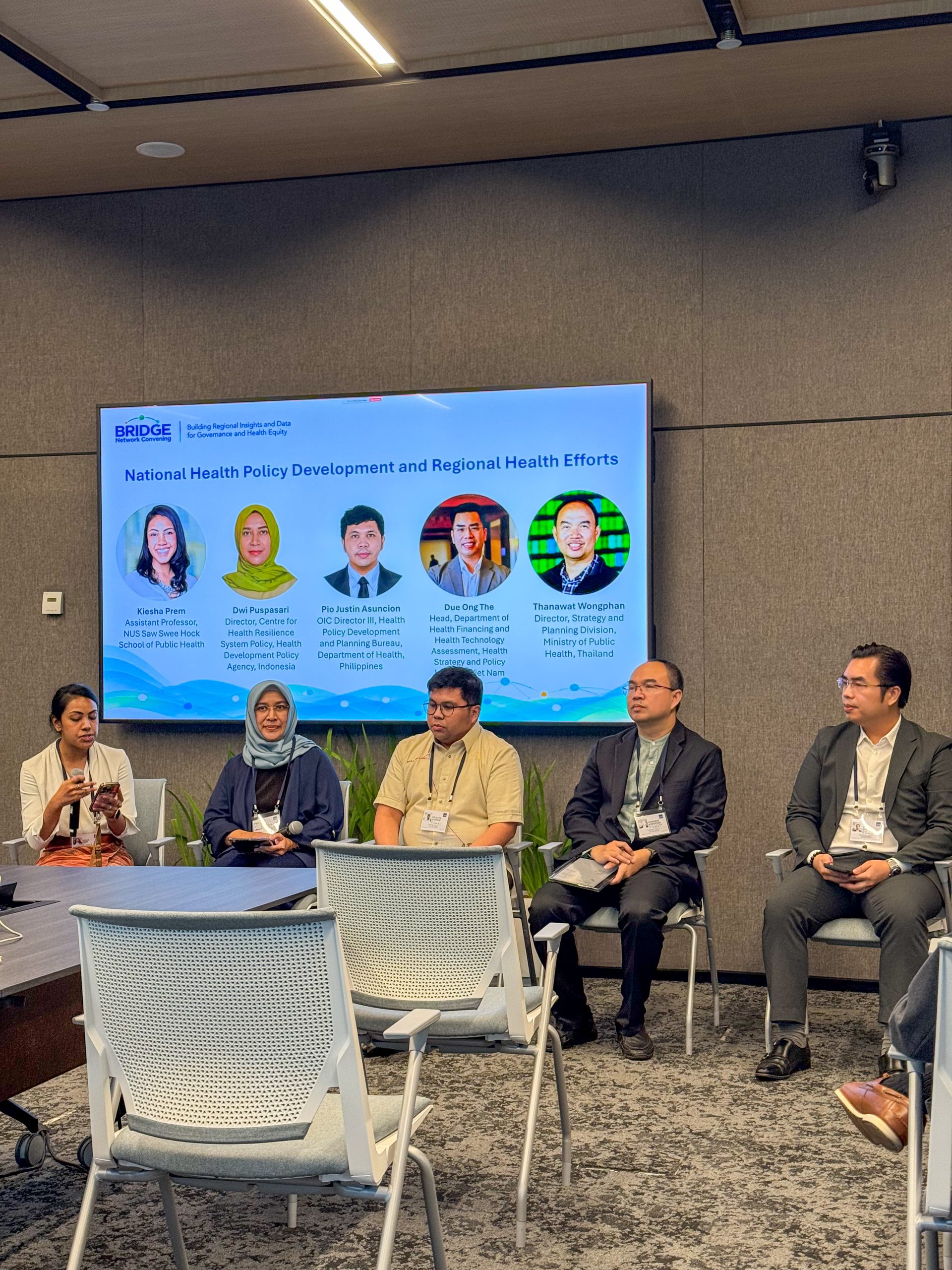
- The Second Biannual BRIDGE Convening (17–18 September). Held at ADB and co-organized by PIDS, ADB, NUS SSHSPH, and CMB Foundation.
The first asked how the Philippines can spend better on health. The second asked how the region can know better. Together, they made one case: strategic purchasing works best when it is backed by good data and informed by regional experience.
The message from Dr Valerie Gilbert Ulep (PIDS-HEFP) set the tone: the Philippines’ decade of fast-growing health budgets is ending. Government health expenditure has tripled, yet out-of-pocket costs still make up 41% of the current health expenditure. Hospital prices also rose nearly 20% in 2025, even as PhilHealth raised its rates. With slower growth and tighter budgets ahead, the challenge is no longer only spending more, but spending better. That is the core promise of strategic purchasing.
Fragmented financing emerged as a common barrier across countries. Dr Sarah Reem Hesham (PIDS-HEFP) found that only 4 of 117 province- and city-wide health systems can fully fund their primary care costs from local budgets. Yet most could do so if PhilHealth funds were pooled and used strategically. Indonesia faces a similar problem: Dr Ery Setiawan (Health Systems Insight/Universitas Indonesia) described 11 funding streams, each with its own rules, flowing into every Puskesmas. His key point applies to both countries: integration doesn’t require a single pool, only funds that work toward the same goal. On provider payment, Dr Lea Conda and Jhanna Uy (PIDS-HEFP) showed that the Philippines has no formal system for setting physician fees. PhilHealth claims data reveal PHP 162 billion in fees in 2025, with wide variation even for simple procedures.
Prof Piya Hanvoravongchai’s (NUS SSHSPH and BRIDGE) presentation in the third theme highlighted why regional collaboration matters, with a highly relatable analogy of a “road trip” towards UHC. As countries facing similar challenges, such as the fragmentation issue in the Philippines and Indonesia, each has lessons to offer the other. BRIDGE exists to facilitate exactly this kind of cross-country learning and capacity building to utilize the readily available data towards evidence-informed policymaking. This is where SEARCH resonated the most, as we share the same vision: fostering regional collaboration to advance UHC.
The resonance poured further in the BRIDGE convening sessions on 17 and 18 September. Prof Teo Yik Ying, the Dean of Saw Swee Hock School of Public Health, opened with a framing that set the tone: knowledge sovereignty. Countries need their own experts to advise on their own problems, rather than relying on solutions imported from elsewhere. Dr Eduardo Banzon (ADB) made the point concrete. One successful strategy in Singapore may not result in the same success in the Philippines. His second point was equally direct: ADB is there to finance what countries want to do, but countries have to lead the reform.
Much of the convening asked how to measure health system performance well. Dr. Ery Setiawan noted that a single composite score can mislead. Knowing what share of children are no longer stunted tells you little about why the rest still are. Vietnam’s team explored whether a set of dimensions can capture performance more faithfully. Dr Marie Ng (NUS-IHME) offered a striking regional angle: Singapore’s life expectancy far exceeds its neighbours’, yet it also loses more years to disability. We have learned to extend life; extending healthy life is the harder question. Country presentations from Lao PDR and Thailand grounded these questions in practice, covering integrated health IDs, EMRs that remain fragmented across vendors, superapps evolved from COVID tools, and the shared obstacles of cost, interoperability standards, and a thin data and analytics workforce. One insight from the panel stuck with us: data itself can be hard to share, but practices and habits move more freely. Trust, as Thailand’s team put it, is the real currency of cross-country learning.
The convening also worked on concrete deliverables. ADB sought to align its Country Health Diagnostics with countries’ current priorities, while the WHO Asia Pacific Observatory assessed which skills countries most need for Health Systems in Transition training. Group work then produced three priority areas for the network: financing, human resources for health, and quality of care. For SEARCH, the first of these is home ground. It closes the loop with the PIDS forum a day earlier: purchasing reforms need evidence that countries generate and trust themselves, and evidence agendas matter most when they change how money flows. Both networks are building the same thing from different ends.
